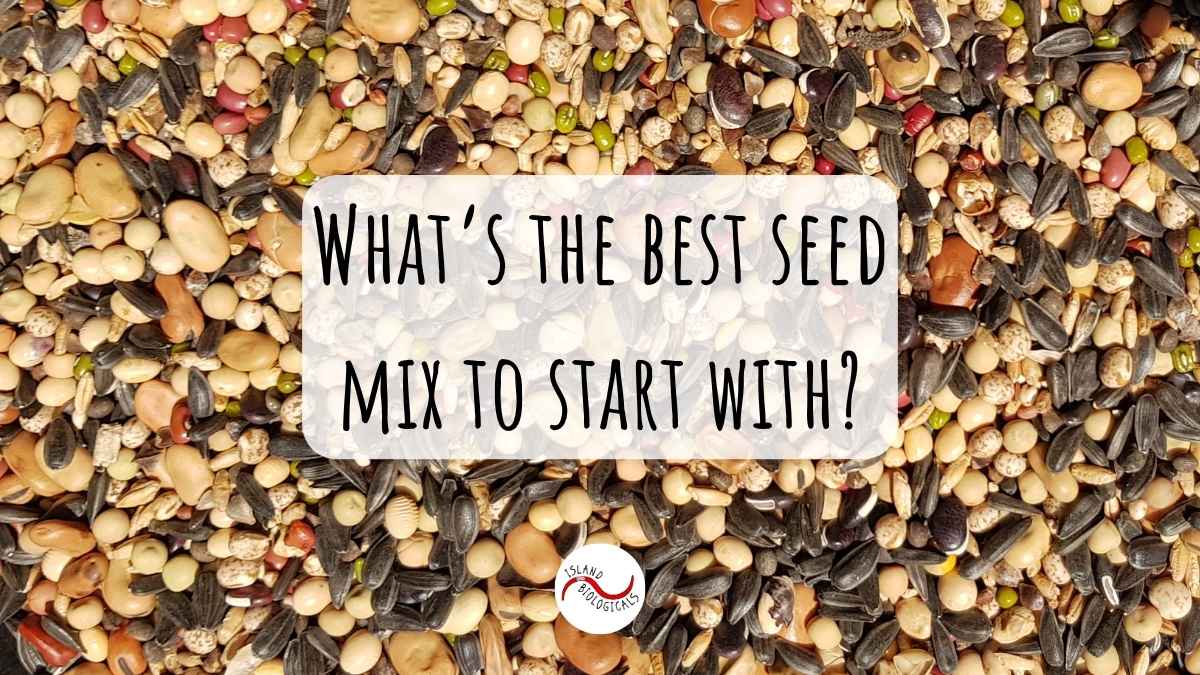
Multi species seeding. “What’s the best mix to start with??” We got this question on our Facebook page in response to the great results Chris Eggert and other customers are seeing when they use Biocast primed multi species seed. See our previous post ‘Seeds as a tool for building soil structure‘ for more on that. The short answer is ‘start wherever you want!’ which is possibly not that helpful, so we’re writing this post pulling together some tips and resources for you.
The most important point
There’s no one right way!
Each farm is unique in terms of soils and geography, what you produce and how, and also what you’d like to get out of a multi! The most important thing is to understand basic principles so you can get going. We advocate learning with your land. Start in any way that feels safe. That might look like choosing whatever cheap seed you can get your hands on, or allocating quite a small area for a trial. What we learn from farmers like Chris is there’s no ‘perfect’, there’s jumping on opportunities and having a go.
Don’t get stuck: an affordable pre-mix suitable to your climate on one paddock can be a great starting point for many.
Work back from your goal
When it comes to building the soil sponge and getting all the gifts that come with that (resilience to extreme weather! Increased production! More fertile, stable and accessible soil! Climate regulation! And more…) the goal is 365 days of plant cover with as much diversity as possible, and management that supports soil biology. People are achieving this even in semi arid conditions, so it turns out that water availability is less of an excuse than we thought. We are noticing that when farmers ask ‘how could I do this’, the creative doors start to open.
What goals do you have? Do you want to support pollinators? Harvest multiple crops? Increase biodiversity? Improve forage quality? Know what you’re aiming for then start asking yourself ‘how could I…?” and give things a try.
Don’t get stuck: The answers to these and what works best for you will come over time and practice! Picking even one safe seed type to add in will get the ball rolling.
The more species the better
A natural ‘grassland’ would have hundreds of species. Christine Jones pondered why they’re called grasslands when they’re dominated by forbs. Each plant species functions slightly differently to another when it comes to interactions with sunlight, water, minerals, microbes and cycling; so the more plant types you have the more functions you cover. Importantly, research from the Jena Experiment shows that you want species from different families (ie. grasses are all Poaceae, legumes are all in the Fabaceae family) and ideally you want to cover at least four ‘functional groups’:
- Grass
- Legume
- Tall forb
- Short forb
Their research showed the best results with 16+ species across these functional groups, but if you can just get the four you should see benefit.
Don’t get stuck: Even adding one species from a different family will be more than you have now, and you can layer in over time.
Use bare seed and bioprime it
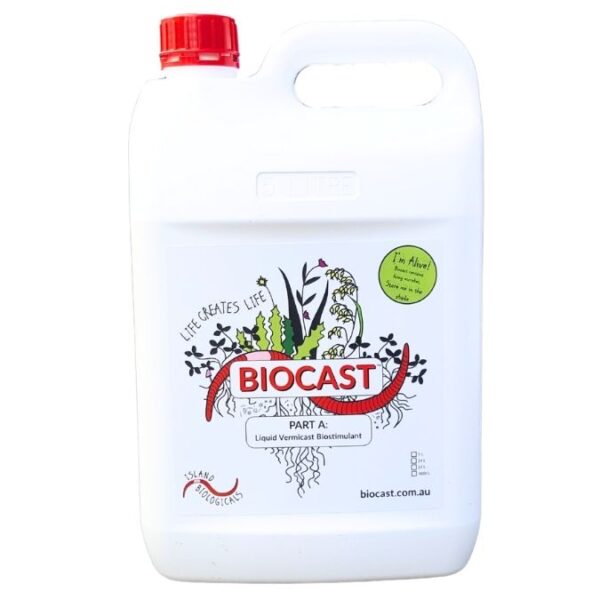
If you can source it, use uncoated seed. This will help your seed to establish a relationship with soil microbes and with the other seeds. The benefit of a multi is all the plants working together as a community. Chemicals are like signal blockers, dampening that community vibe and impacting the function of your beneficial microbes. Adding a vermicast biostimulant like Biocast as a bioprimer is like a signal amplifier, helping to supercharge results and biologically meet those functions that the chemical coatings were providing. Biocast is wonderful for seed establishment and connects plants to soil resources straight away, reducing or eliminating the need for starter ferts.
Don’t get stuck: You get to decide what your priorities are. We know plenty of people who’ve only been able to get coated seed and decide to have a go anyway. Consider that you can add Biocast as a foliar later to promote the soil’s communication pathways.
What can you get your hands on?
Sometimes the question of what to put in comes down to what you can get your hands on. Chris Eggert for example famously uses bird seed sometimes in his mix because it’s cheap and available. If he want’s something in his mix but it’s not available he’ll sow anyway, then layer in with the other seed when it arrives. What’s at your local ag store? What pre mixes are available to you? What can you afford and what do you have the equipment to sow? Some people will prefer the ease of a pre-mixed multi and others will prefer the flexibility of DIY. There’s no right or wrong.
Don’t get stuck: If you’re not sure how it will go, get a small volume and see if it takes. Remember too, just because it doesn’t grow this season doesn’t mean it won’t ever grow at your place!
Resources
The points above cover the basics of getting started. Here are some additional resources:

Pasture Dieback: 60+ species that will help you address your feed gap and improve your soil
If you’re farming north of Sydney we compiled a great list of annual and perennial species you could use in pasture. Bonus, these species will not be affected by pasture dieback.
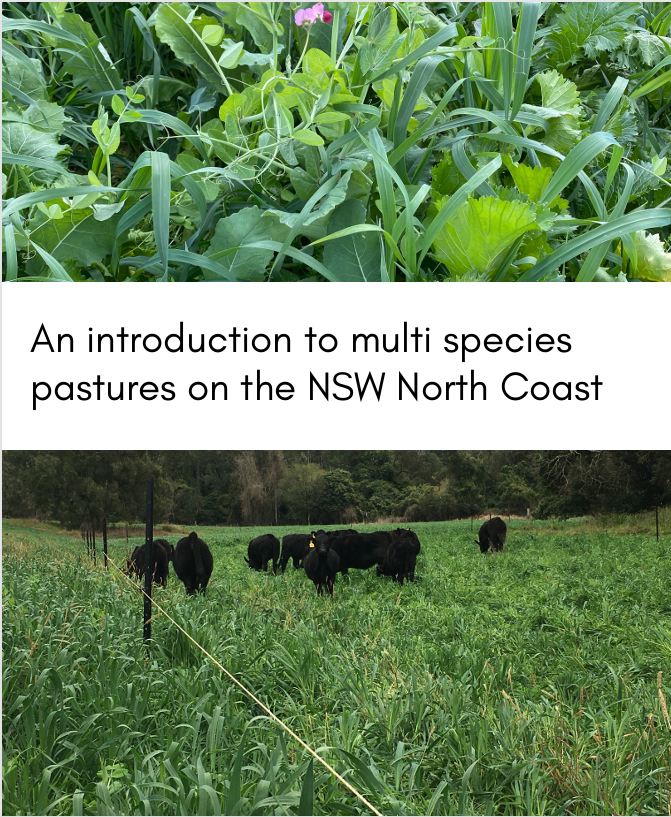
An introduction to multi species pastures on the NSW North Coast
Gavin Tinning and co at Farming Together have put together a wonderful multi species guide for North Coast NSW. It includes advice for getting started, planting methods and considerations, and species selection.
Soils for Life: Practice Guide on Multispecies Cropping
An online resource sharing tips and farmer experiences on using multi species in cropping operations in Australia.
Seeds as a tool for building soil structure
In this post we shared 10 practical lessons on using bioprimed seeds as a soil building tool that we’ve gained or honed through working with Chris Eggert and his amazing multis over the past few years.
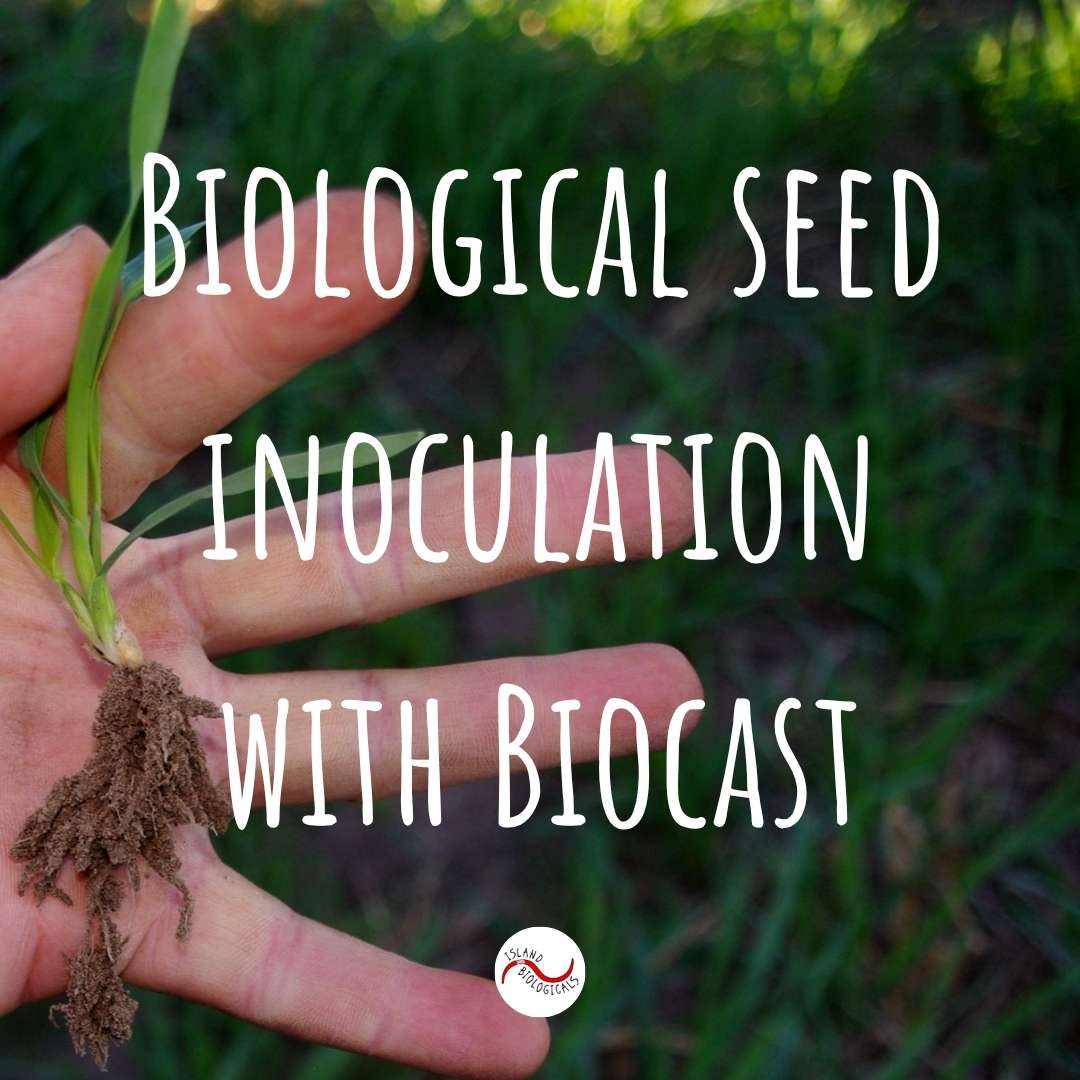
Biological seed inoculation with Biocast
In this post we wrote about the science, the experiences, and the how to of using Biocast to prime seeds. it’s everything you need to know about using it to get the best start for your seeds.
Pre-mixed seed
We love the mixes from Down Under AG. We’re not an affiliate, but have used them and found them to have a good mix with an impressive families cover. There are also plenty of different mixes to choose from!
Video: getting started with seed diversity
In this short video we show just how easy it can be to get started with multi species! It doesn’t have to be fancy to be effective!
Tempering your expectations
This is a long term project, an new way of being with and managing your land. There is a learning curve! Year 1 will not be the best year, because the soil biology builds fertility year on year on year. A very common experience in fact is to feel disappointed in the first season. The action is happening underground, so it could help to do some basic soil monitoring to see if there’s been any unseen progress. You might put an 8-way mix in but only half the things germinate. It’s simply an indicator of where your soil is at, and with persistance you should see improvement. Biocast will help, careful planned grazing will help, and potentially addressing some trace mineral deficiencies will help too. Calcium is an especially common one we see. If you are weaning off urea that could take a few years too. We recommend the peer support of local farming groups, and please feel free to get in touch with us if you have any questions.
Don’t get stuck. Remember: life rarely provides us with the perfect conditions. What step can you take anyway?
Have you started with multi species? What would you suggest? Comment below!
Would you like some Biocast to prime your seed? Order it here. Please get in touch if you have any questions!