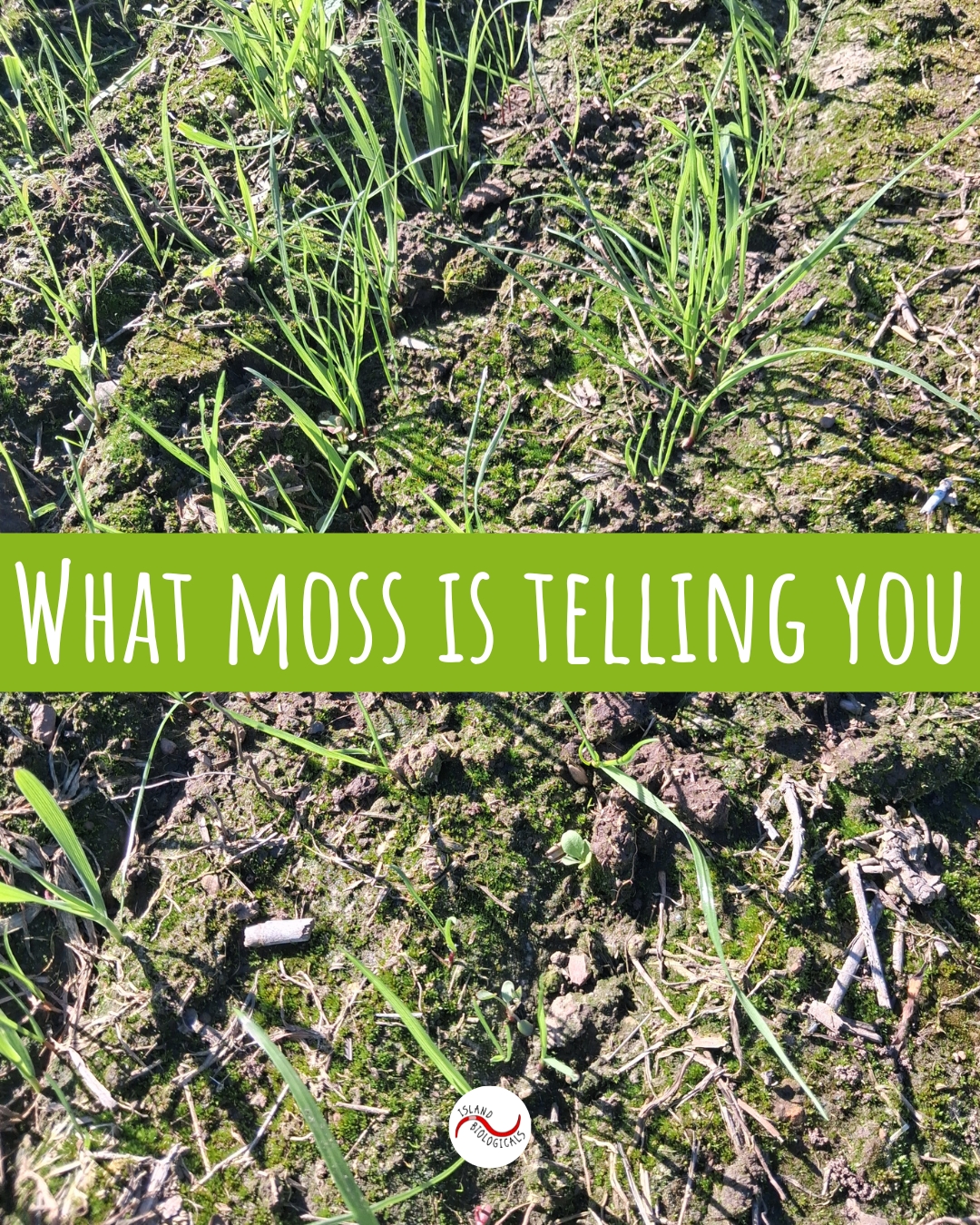
Do you have moss cover on your soil, like in this picture?
We might guess that you’re also having trouble with things like compaction, with water pooling during rain, trouble with drought, poor germination of seedlings, and pest and disease pressure?
The moss is telling you that biologically speaking, your soil is ‘early successional’, to put it politely. One might say you’ve had a fair crack at unaliving it, the soil biology is now slightly advanced on having come out of a volcano.
The good news is that you can turn this around and create the fertility and well structured, hydrated conditions that comes from biologically thriving soils within a few seasons, given the right management.
The bad news is that you have to change the way you’ve been doing things, because the way you’ve been doing things has sent your land back to the Carboniferous. Oops.
A stepping stone towards healthy soil
The first thing to know is that the moss is GOOD. It is a significant contributor to soil health. It is wonderfully water retentive, breaks down minerals in your soil to make them bioavailable, and photosynthesises to create the energy building blocks for other life forms. Your first step is to leave it and let it do its job.
The problem your soil has is lack of much else by way of life.
How did we get here?
The moss cover on your soil is doing an essential job. For soil to be soil, and not dirt, it requires life. The processes of life in soils (i.e. the function of biology), including everything from microbes to insects to plants and animals create conditions conducive to more life. They create the glues that give soil structure and stability, allow water to penetrate and be held without waterlogging, hold nutrients in biological forms, and of course create habitat for all the micro-workers that keep your plants thriving.
Where you have persistent moss cover, you very likely had an event, or events, that killed a lot of your soil life, and the moss has come in to get things started again. We were tongue in cheek before about having sent your land back to the Carboniferous era, but moss was the precursor to plant life on Earth, and this is when it likely evolved. It is often the first living thing to colonise newly laid volcanic rock, starting the soil formation process. If there is space for moss cover like this, other soil life is having a really tough time getting established.
Your event(s) could have been something ‘natural’ like severe waterlogging or drying. We put natural in apostrophes here because often these events are made more extreme and more impactful by our land management choices. In the case of the land in the pictured image above, that ground had been treated in a way that would be considered best practice by many agricultural advisors to prepare for sowing. It was cleared with herbicides, tilled, had starter fertilisers applied, and the seeds were coated (we’re not sure what with, but it probably included a fungicide). The moss is telling you how the soil went with that treatment.
A big part of the problem, as we see it, is that maintaining soil function is ignored, undervalued or not understood well enough to be able to make decisions that lead to true thriving of our plants and farms.
So what’s the next step?
Kickstarting biological function
We (obviously, because we make it) recommend an application or two of Biocast to give your land the stimulus for biological succession. Biocast is great for kickstarting the biological function of your soil to get more life in that will support the life you want – your crops and pastures. That’s because Biocast is full of living microbes and (more importantly we reckon) the signals for life in the form of things like enzymes, phytohormones and humic compounds.
Biocast, however, is not a silver bullet – nothing is. That part where we mentioned doing things differently is more than just using a different product. If there was a practice killing soil life, that also needs to stop or change, and you will want to add in practices that support support diverse soil life.
Want some help?
If you’ve managed to find this post in July 2026 we have some great news for you. Right now is a great time to place your Biocast order, because for all orders of 100L or more placed this July, we are offering a complimentary biological consult for your farm with our founder, Lee Fieldhouse. That means we can take a look at your farm with you, and chat about the types of actions that might work for you and your land to get things functioning better.
If you’re ready to change things up and get the benefits of healthy biology on your farm, get in touch today! You can find all the details of our July consult offer in our previous post, here.