A couple of weeks ago, Didi Pershouse and Henry Nichols from the Land and Leadership Initiative held a webinar with Vijay Kumar Thallam of the Andhra Pradesh Community Managed Natural Farming project entitled ‘Farming Beyond Fertilisers: What can 1.8 million farmers in Andhra Pradesh teach us as we adapt to global shortages in synthetic fertilizers?’ I caught up on it last weekend and I’m extremely inspired.
[You can watch it here: Farming Beyond Fertilizer: with Vijay Kumar Thallam of APCNF. The core presentation starts at around 39 minutes, but there’s interesting discussion before and after.]
Cliff notes
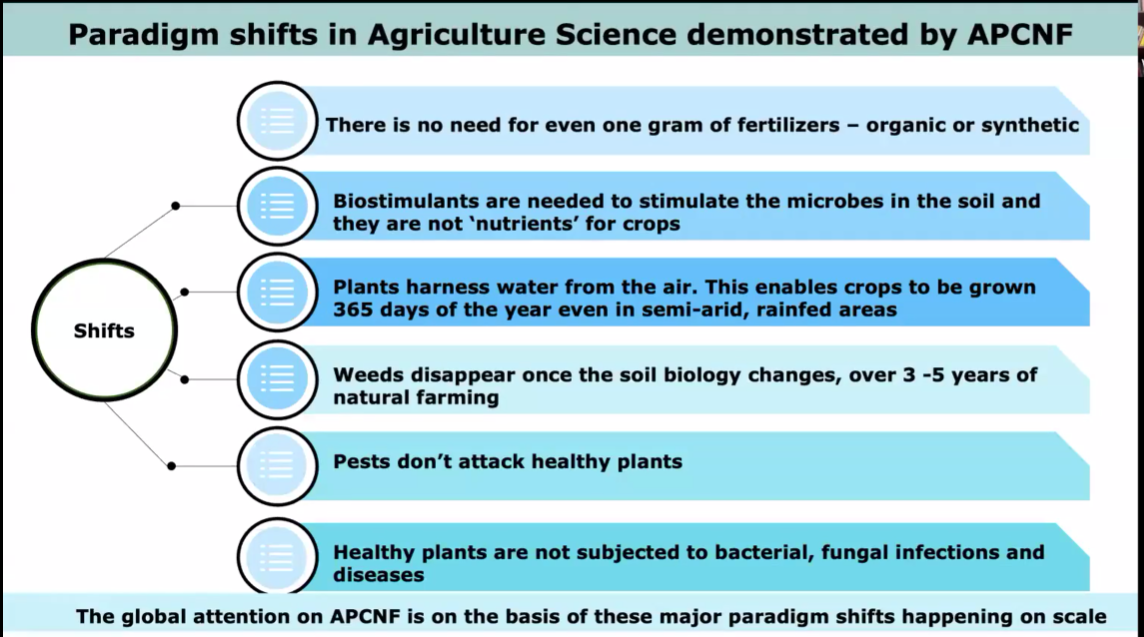
There are 1.8 MILLION farmers in the state of Andhra Pradesh, India, who are using a method called ‘Community-managed Natural Farming’. What they say is that this is not ‘traditional farming’ as in pre-green revolution methods. This is modern farming utilising the latest scientific understanding of soils, plants and microbiology. It is within a values framework that wants to enhance the lives and livelihoods of as many people as possible, and regenerate land. This slide that I screenshot from the presentation shows the key features of this method:
Their results are incredible. Farmers are seeing a huge increase in profit in the first year, increasing year on year (this has been going since 2019). Yield is maintained or slightly dropped (around 2%) in the first year, and surpasses chemical method yields by the second year and keeps climbing. Weed and disease pressure goes down, water and temperature stabilise, and they are achieving 100% cover even in semi arid and drought conditions. Recovery from natural disasters (including floods and cyclones) has been impressive. The people are also measurably healthier, wealthier, and happier.
Especially interesting (to us at least as a biostimulant maker) is that required inputs drop to zero at the 6 year mark. As in they don’t even need their biostimulants or natural pesticides any more, they are achieving a self-sustaining system. I can tell you that we’re here for it!! Can you imagine what our country would look and feel and function like if this were happening on every farm? That is a world I want to live in. Lee and I are fine to go do something else if the country is humming that well!
Obviously there are huge differences between India and Australia. We have different soils for example, different plants, much larger land holdings with fewer helping hands, and comparatively less government support. Does that mean we can’t learn something here though, or achieve our own version of these incredible results? NO!
I am inspired by the idea that our personal most inspiring farmer, experimenting with the limits of what’s possible locally and achieving phenomenal results, isn’t at the top level of achievement by the Andhra Pradesh standard, or even the second top level of achievement. What this translates to is So. Much. Potential. How much yield can we achieve in marginal weather? How much water can we store? What could our farmer profit margins look like? How nutritious could our food be? The answer is truly we have no idea.
Some practical next steps
- Watch the presentation. More information can also be found on the project website at https://apcnf.in/
- Didi is pulling together a course to deepen our understanding of the concepts and help us implement it wherever we are in the world. Fill in the expression of interest form on the reply page to stay in that loop directly.
- Set aside an area of your farm to learn on. A great starting point in the Australian context is to prime mixed species seed with Biocast. Tailor your seed mix to whatever suits you, be it forage, soil building, or crop or silage/ hay harvest. Check out this post for a simple starting point!
- Are you interested in being part of an Australian community of practice around these ideas? I’m curious as to whether there’s any interest in a virtual group, please let us know! Either comment below or email kirsty@islandbiologicals.com.au
Final note
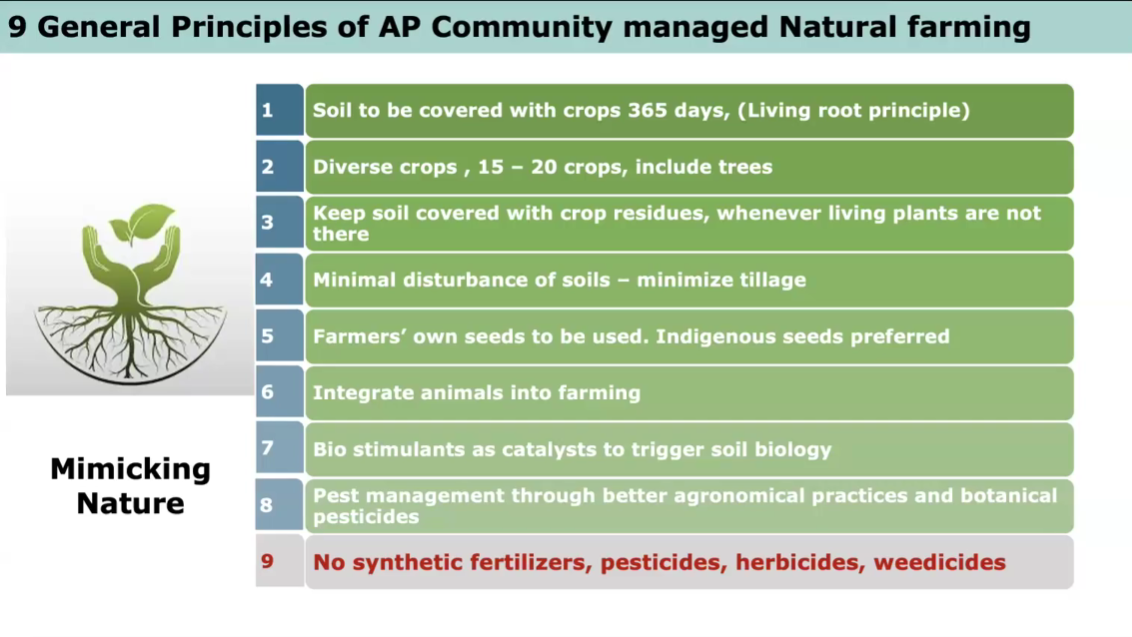
This slide shows what this project is demonstrating. These principles can be applied anywhere, it’s just about figuring out the locally effective techniques to achieve it. Are you in?