By Kirsty Hughes
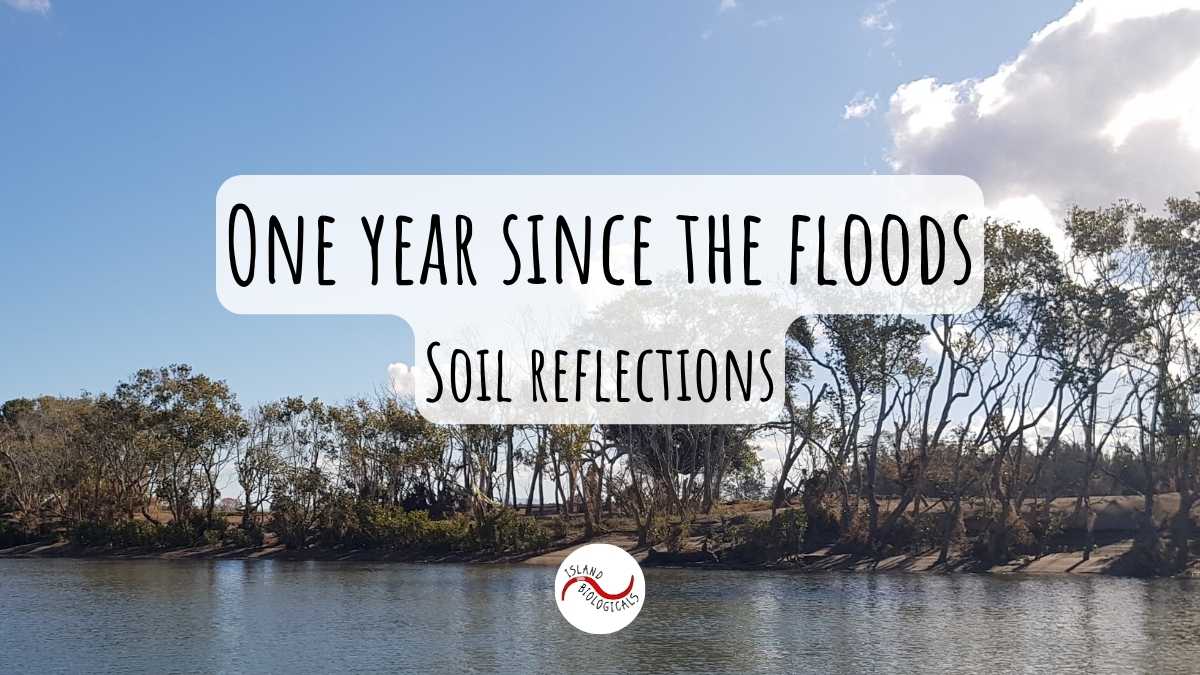
Image above: farmland with a fresh deposit of flood mud, taken 1 month post-flood.
We are at the one year anniversary of the record floods that affected our river – the Manning – in May 2025, as well as the NSW mid north coast more broadly. This piece is specifically about what we have seen with local farmland and soils. The real impacts of course are far more wide-reaching, with social and financial impacts across the community; damage to local infrastructure including homes, businesses, roads, bridges, and parks; pollution issues; and impacts on the river itself and its flora and fauna.
Our area, for the non-locals
The Manning River has a catchment area of approximately 8100km2, which is approximately one third farmland (mostly grazing), one third national park, and one third forestry land. The mid and upper catchment could be roughly described as very hilly, with narrow river valleys. There are some larger floodplain pockets in the mid catchment around the town of Gloucester, which are utilised for more intensive agriculture. The lower catchment is characterised by a large coastal floodplain with multiple estuarine river channels. The largest population centre, Taree, is here, and the floodplains are considered prime dairy country. We live on the coast near the southern mouth of the Manning, and the farm is on Oxley Island which is an island within this large floodplain delta.
The event
On the night before the floods we heard the rain sheet down, unrelenting. It had been a wet few months, and the soils were already sodden before this deluge. It sounded like we were sleeping in a houseboat. We learned that this huge downpour had happened across our whole catchment (approx. 8100km2), which is unusual. Normally the rain would be either coastal or inland, and more intense in one sub-catchment than others. Not this time.
The rivers started rising rapidly. It was hard to know exactly what was happening because the force of the water took out a few gauges, including the one we personally find most useful to judge incoming water level. Word of mouth was important. In Taree the water continued to rise past the large flood peak from four years previous, past the 1978 and 1929 record floods, and up another half a metre. They were calling it a 1 in 500 year event.
[Note – 1 in X years is an engineering term to describe, on average, how often such a sized event occurs based on historical averages and modelling. It is not literally only once every X years. Nature is not so tidy.]
The low pressure rainfall system sat on top of us for about four days. The first day Taree saw 275mm, with 605mm total over the four days. For comparison, Taree’s annual average rainfall is about 1200 mm. The river peaked on 21 May.
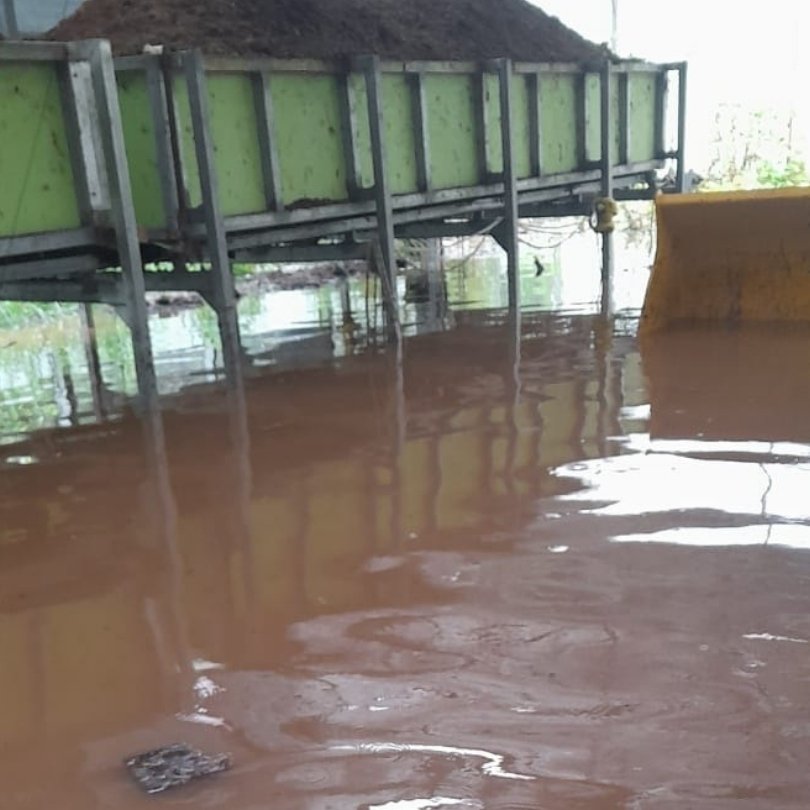
Lucky our worm beds are elevated! This is about the flood peak, we never expected the river would be able to inundate this far. A fair bit less dramatic than other photos around, but they aren’t ours to show.
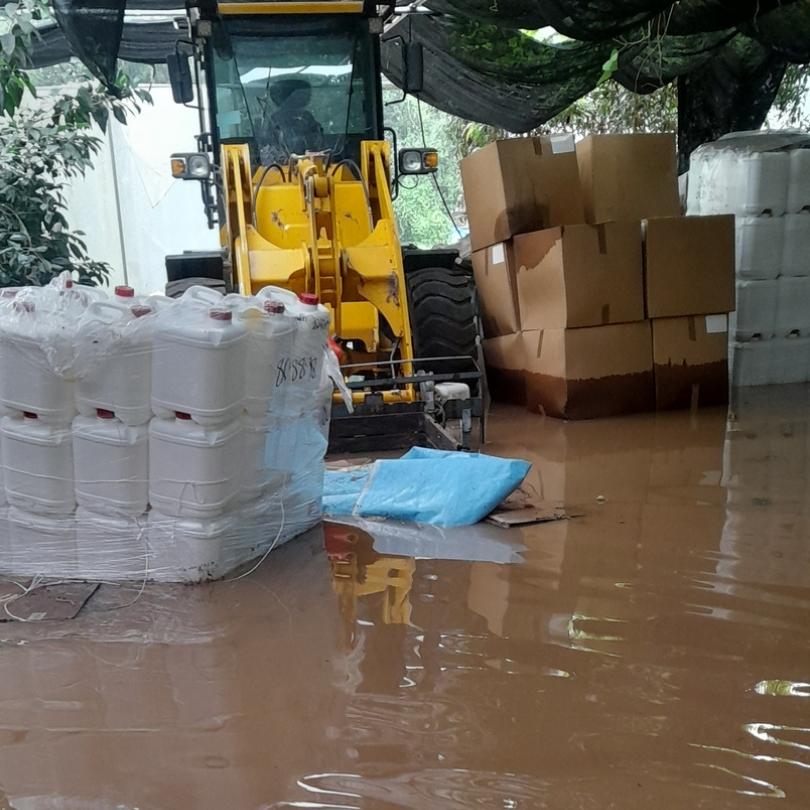
Luckily for us the flood made a mess but didn’t do much real damage. Many others were not so fortunate.
The immediate aftermath
The floodwaters gouged out the floodplains of the mid and upper catchment, carving new paths and leaving many farmers with hundreds of metres of gravel and boulders where there was previously pasture. From a geomorphic perspective, this event eroded hundreds, if not thousands of years’ worth of deposition and created a more open style of river in keeping with the low levels of tree cover on the modern floodplain and pastured hillsides (historically this country would have largely been rainforest and thick brush). It is hard to reckon with the scale of these changes. Livestock and property were also washed away.
Much of this sediment was deposited as mud on the lowland floodplains. In people’s houses and shops, sheds and streets. In some cases, metres of it was deposited on pasture, unconsolidated and inaccessible, at risk of being washed away again in the next flood. There was also a large amount of debris, especially caught around trees and fences, including a lot of rubbish. Notable here is how much plastic-wrapped silage floated around. A lot of it is still there.
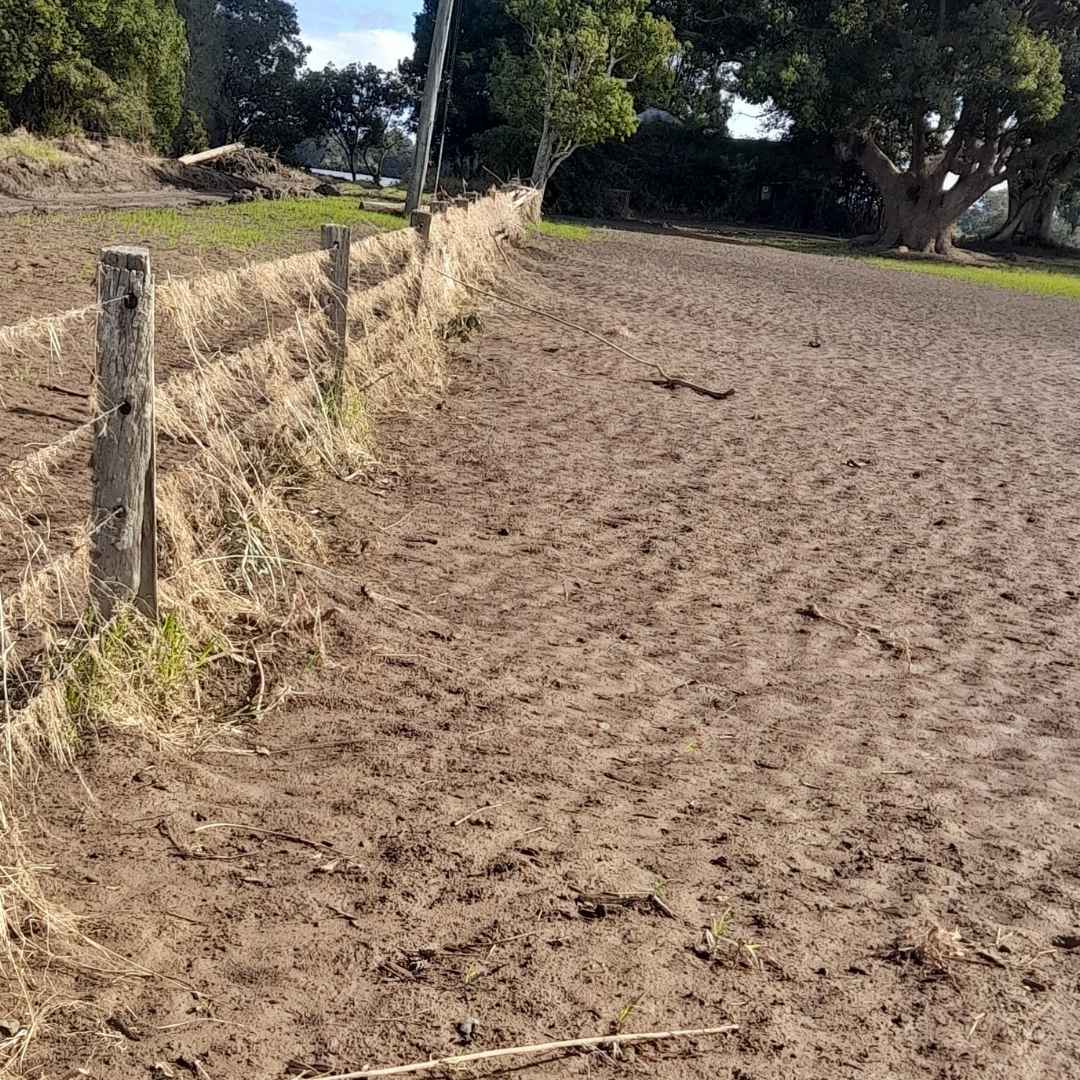
A layer of mud deposited over a friend’s pasture on Oxley Island in the flood.
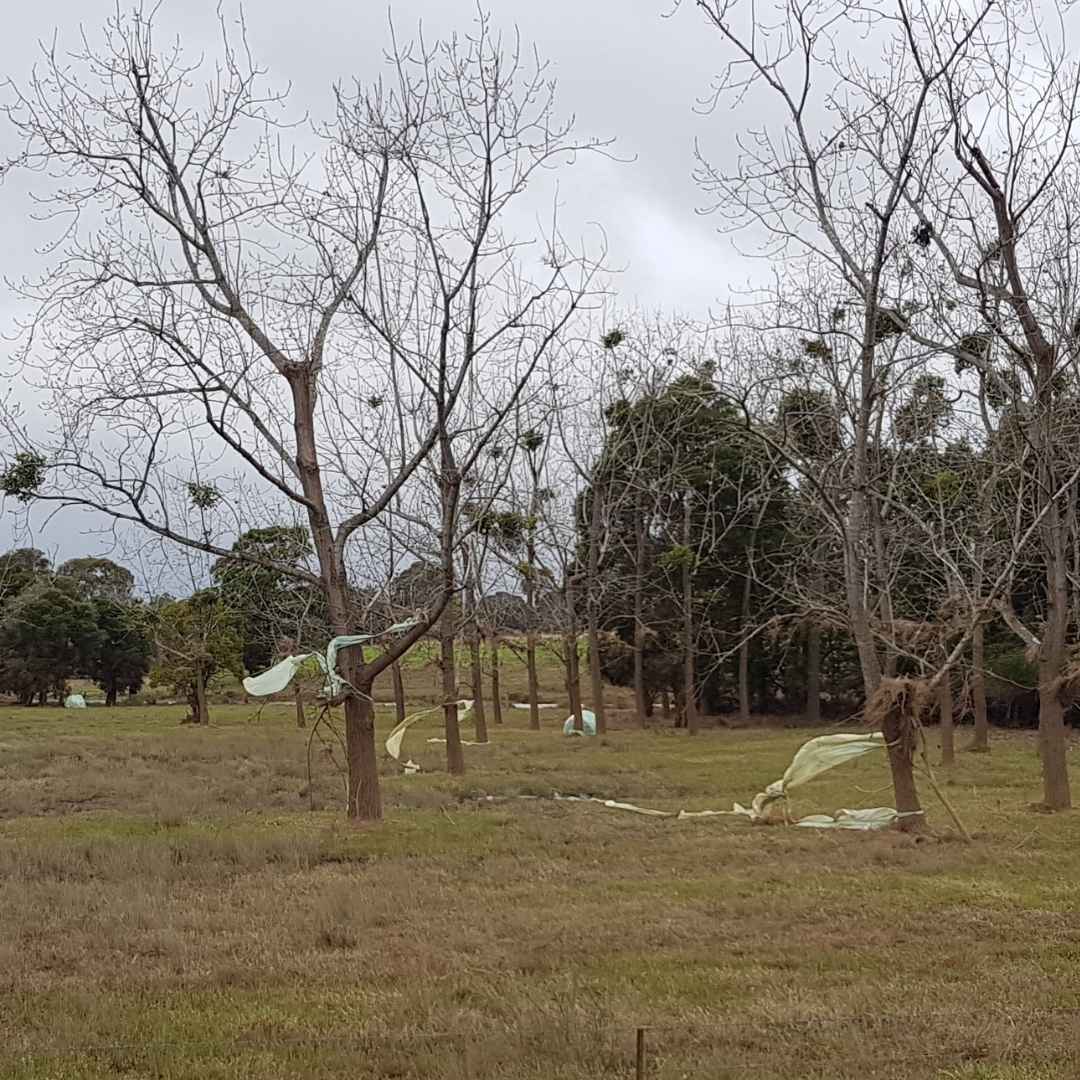
Silage wrap littering the landscape.
The year since
From a farming perspective, it has been a very challenging year for many. There has of course been a huge mental and emotional toll, damage to infrastructure, and loss of livestock from the flood. We know quite a few people who have moved. The flood happened in late autumn at the very end of the cool season sowing window. Most farmers couldn’t get on their paddocks for weeks due to the waterlogging, then the winter came and it was a very dull, overcast number with slow growth. Come spring it forgot to rain again, and we had a fairly dry summer and autumn across much of the region. For the most part, to look at, one year on pastures have recovered. A friend who has also studied holistic management noted that the humidity here, creating a less brittle environment, has given us better recovery than they have seen in more brittle environments in southern Australia.
Soils are struggling
The prolonged waterlogging took its toll, and we have seen the widespread loss of soil structure. Signs of this include hard soil and capping, soils that are difficult to re-wet, and soils that erode easily. In some cases weeds can also be an indicator, but we also see that people are grappling with a huge weed seed burden carried by the floods. Look in particular to the types of herbaceous annuals that pop up as to what they tell you about soil conditions. Bare soil gaps can also be an indicator with seed finding it hard to germinate on capped soil.
There are three mechanisms that cause soil structure collapse in a prolonged wet event like this one. First, water fills up all the pore spaces in the soil, displacing oxygen. Mineral soil can collapse on itself and loses structure, in a process called aggregate slaking, and clays can move into pore spaces. Some soil types are more prone to this than others, and soils with good functional biology are more resilient. It can result in surface sealing and crusting additional to overall soil structure collapse. Secondly, anaerobic conditions set in which has consequences for the soil chemistry holding structure in place, including the reduction and solubilisation of iron and manganese compounds that act as natural binding agents between particles. Water-soluble soil minerals such as forms of calcium, magnesium, and potassium also dissolve into the water, and nitrogen off gasses. Thirdly, aerobic soil microbes and invertebrates die or go dormant. These organisms create the ‘glues’ that bind soil particles into stable aggregates, and production stops. Mycorrhizal fungi, which are key soil structure creators in some soils, are particularly affected by the anaerobic conditions.
One thing that was particularly notable was how soon after this incredible wet the pastures were showing signs of water stress. They were wilting in the dry. It might seem like a dry spell was to blame, and in part would have contributed, but the deeper issue (literally and figuratively) is that the post-waterlogged soils didn’t have the oomph to support the plants. The sponge had collapsed, but the loss of trace minerals would also be at play here. It seemed so ironic.
Loss of soil structure can have serious and ongoing impacts for both the viability of the farm and the resilience of the region to future extreme events. Soil structure collapse from inundation means the soil is acting like a concrete driveway rather than a sponge, and water is simply not infiltrating. The flow on from that is that if all the rainfall is washing off rather than sinking in, there’s higher change of big floods, and so on it goes in a vicious cycle.
How does your place measure up?
If your pasture has recovered that’s the first good sign, but it won’t always indicate whether there are structural problems in your soil that will leave you vulnerable to both future floods and droughts. Here are a few easy tests you can do to assess soil structure health at your place. Keep an eye on it over time.
1/ Compaction – can you poke a stick or pencil into your soil easily? A finger? A shovel or pocketknife? You can get penetrometers to give you data, but simple sticks can give you a feel for what’s going on over a season. Not being able to poke a pocketknife in is a really bad sign.
2/ Water infiltration – conduct a simple water infiltration test with a bit of cut off pipe. See our video here.
3/ Feel – dig up a clod of soil. Is there any springiness to it? Is it crumbly or firm? Can you shape it at all? Get to know the feel of your soil. The more it resembles a sponge, the more functional it will be for catching rain and growing healthy plants.
4/ Slake test – put a bit of soil in water and see what happens. Leave it there for a day. Does it fall apart or stick together? See our video here. A similar test can be done with a pea-sized clod of soil in a petri dish of water.
5/ Optional extra: do an earthworm count – Earthworms help to create soil structure and help to create optimal growing conditions for plants. Is your land supporting good populations of them? This monitoring is great to do once or twice a year, ideally spring and autumn. See the instructional videos that we did with EcoVineyards here.
Did we have good soil structure before the floods though?
One of the most alarming things for me was seeing a soil pit up near Gloucester a few months later. The clay sub soil was bone dry. Reports from other field day participants were that they had the same at their place. By rights, in a healthy soil, with that volume and duration of rain that clay should have been holding water. Rain is not recharging our sub soil. This is our reservoir when it doesn’t rain, our resilience – we have none. We are extremely vulnerable to the weather. And with weather becoming increasingly erratic and unpredictable, this is very undesirable.
I’ll also say, as someone who’s been casting a trained eye over this catchment since 2008, that the way we manage farmland across the region is not congruent with building soil structure and the functional health of the soil. Our choice of plants, the way we manage animals, the choice of chemical inputs – we really only get away with it because we are fairly humid; and I’m concerned that we’re reaching a collapse point.
The good news is that soil structure and function can be rebuilt and it can be accelerated when we support natural processes. We saw some examples where soil structure improved considerably within a season!
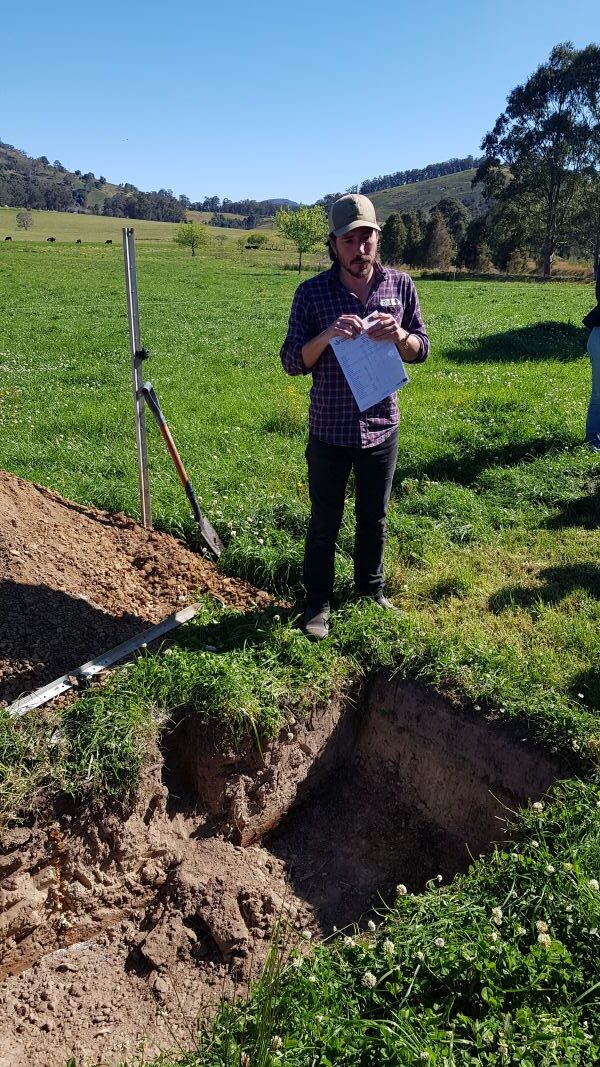
Image: The dry soil pit. It was a Joel Williams field day.
Things that worked
Drones
Agricultural drones are very much a new technology in our area, and they came into their own with the floods. Farmers who used them were able to seed inaccessible paddocks as soon as possible to catch that short growing window.
A note: Some people were using drones to put out large amounts of urea. While denitrification is likely to have occurred and urea will help grass to grow (albeit in an unhealthy and unpalatable way when used like this), we would like to highlight that this high rate of urea application will suppress the formation of soil structure and create the conditions that make the constant input of urea necessary. It will do this without the addition of a flood. To get the best of both worlds – soil structure and N abundance (and healthy, palatable plants!) – we would recommend utilising diverse species including legumes and a range of forbs, starting and supporting with a broad spectrum biostimulant like Biocast, addressing trace mineral deficits, and if necessary doing foliar urea buffered with humates (see for example this article by Graeme Sait, and YouTubes by Joel Williams).
Multi species seed + biostimulant
Farmers who chose multi species seed saw some great results, including improvements to soil structure within about 6 weeks. Our local Landcare network did a drive offering discount multi species seed and Biocast to prime it with. There was a follow up field day on one of the sites and the results were really impressive (pictures below)! It was on soil that we would characterise as tough country, but the condition and bulk of the biomass was excellent, and the soil was softer than it had been with promising signs of invertebrate life.

Photo courtesy Alan Waldon
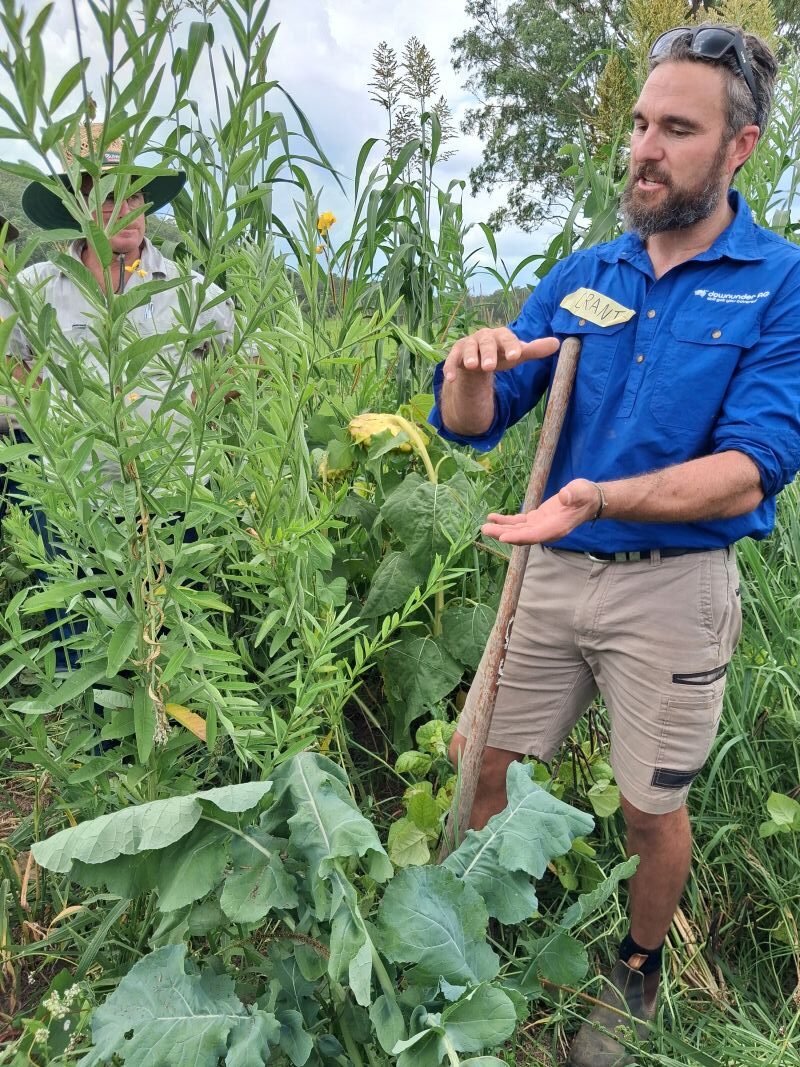
Grant Simms from Down Under Covers was a presenter at the field day. The multi was one of his mixes.
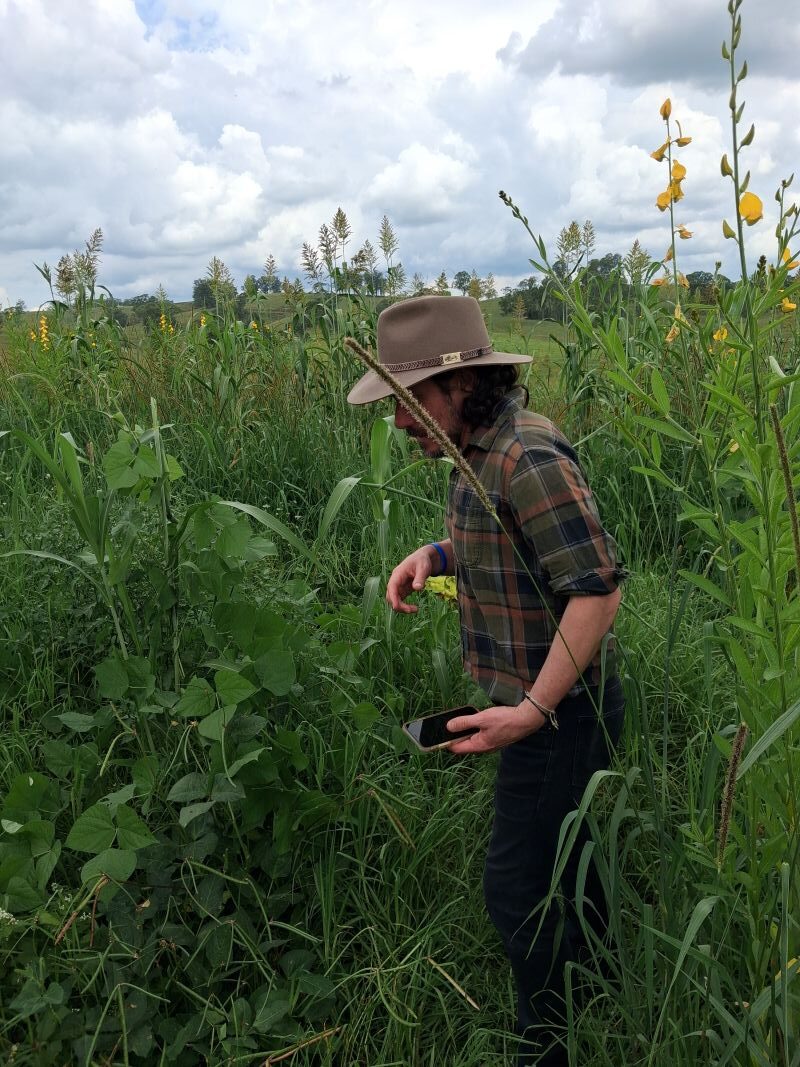
Hey there’s Joel again. He was the other presenter, it was a follow up from the day with the dry pit.
Trees
Trees worked. Our climate, our geography, it’s natural forest country. Of course there were trees lost in the flood, but by and large we observed that well wooded areas, especially river banks, fared much better than grassed areas. A single or sporadic line of casuarinas along the bank didn’t cut it.
Point for reflection: how could we incorporate trees into our farms? Could we even have productive crop or fodder trees more in the mix?
Note: Casuarinas, or river oaks, are early coloniser species. If they come up in your eroded rivers they are doing a job consolidating the gravel and are the first point of rebuilding the floodplain. The river put them there for a reason, leave them. It won’t always look like this. You might want to pull out the privet seedlings now though, as they can have a long term impact on biodiversity. They are easy to hand pull, don’t you go using herbicide in my river.
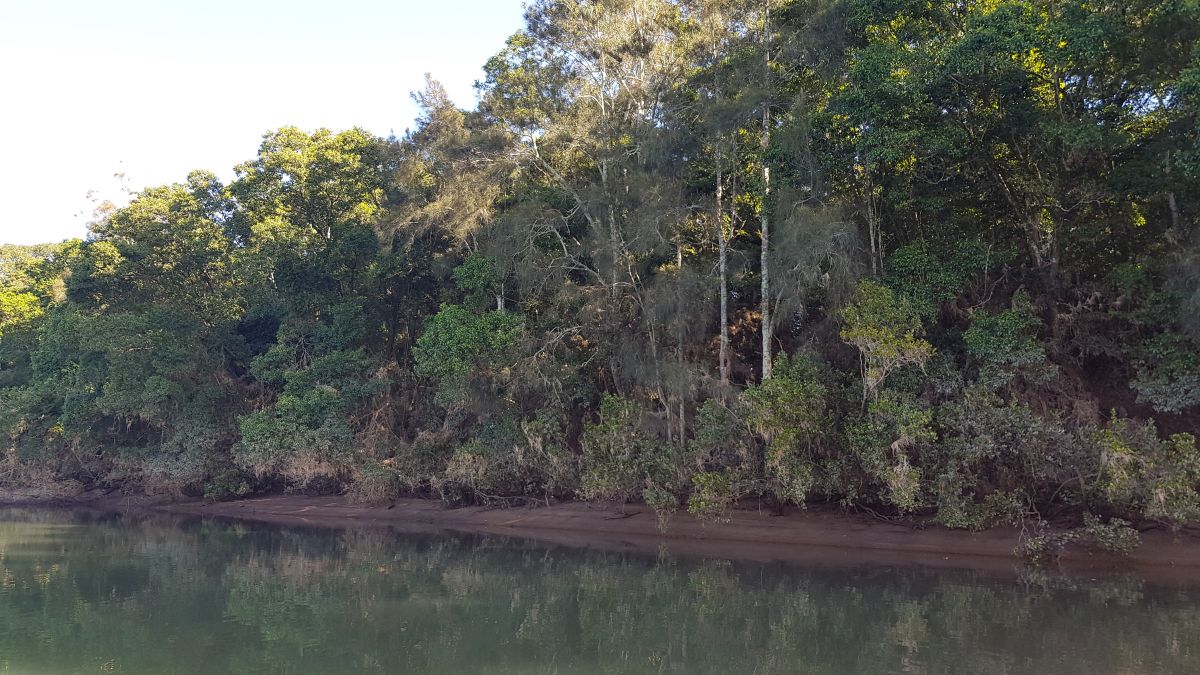
Image: Coocumbac Island, in the middle of the Manning River at Taree, one month post flood. It was totally inundated during the event but held up impressively well.
Community
This is worth mentioning as a thing that worked. So very many people were affected. Everyone came together to do what needed to be done, from rescues to clean up, to laundry, to donations. This is also resilience in action.
Conclusion
A 1:500 year flood is a doozy and I don’t recommend it to anyone. Statistically they have to happen to someone at some stage, so the more we can do to build resilience to these events the better. Climate models suggest that this scale of event will become more common, which is terrifying. Happily, the best solution to both that is both powerful and most within our influence is the same thing – building the biological function of our soil, creating a soil sponge full of stable carbon.
The starting point is life. Biological processes turn dirt into soil. They give soil structure. They hold moisture and nutrients. The greater diversity of life you have, of all kinds, the more effective the whole process will be at offering you resilience. No matter what your soil is like now, you can build the soil sponge and you, and everyone and everything else, will benefit.

We did a very small trial at a friend’s property in the weeks following the flood where Lee scattered a bare multi and a Biocast-primed multi in the mud, just 1m apart.
You can see in the comparative image here the difference the biostimulant has made to a germinating barley seed at 6 days. Same shoot development, vastly different root development. The bare seed on the left easily lifts out; has extremely little access to soil resources including nutrients, water, and microbial assistance; and is not contributing to anything. The Biocast-primed seed on the right however is the opposite. It didn’t pull out and had to be dug out, has access to soil resources and the rhizosheath there indicates that it is contributing already to the formation of soil structure.
6 days. This is how easy it is to get started.
Links and resources
Out of the Mud: we did a webinar after the flood sharing farmer-farmer wisdom which was well received. You can watch it here and find some other video resources too.
Post-flood observation prompts: A 2 page pdf we made to help you check in with where your soil is at.
River rehabilitation guides: There are so many great resources out there. Our local Landcare network has suggested we share ours here, and we’ve included others for the mid north coast too. If your area isn’t listed search the name of your river and ‘rehabilitation guide’, or check in with your local Landcare network or LLS/ CMA.
Camden Haven and Hastings River
Would you like to get your seed off to the best start, or support your plants and soil life to build well-structured, more functional soil? Get some Biocast: